Before Flávio Bolsonaro has won the presidency, appointed a finance minister, or passed a single fiscal reform, Brazilian markets have already awarded him a sizeable credibility premium.
In the run-up to Brazil’s October 4 election, attention focused on Lula and whether he could survive a tightening race against Flávio Bolsonaro. The results were somewhat surprising, with Bolsonaro taking 47.0% of the vote against Lula’s 45.2%. The real rose more than 4% in the aftermath, with the Ibovespa surging and local swaps opening down more than 90bps (the exchange’s maximum initial move). It was a strong repricing for a government that doesn’t yet exist, let alone one that has shown it can deliver the reforms investors are betting on.
Brazil has spent much of this last cycle with the world’s highest interest rates, while government debt and the deficit have widened, creating a dynamic in which certain catalysts could break the equilibrium. Bolsonaro appears to be the catalyst.
Prediction markets have Bolsonaro’s implied runoff probability above 80% after the first round results. Historical precedent suggests that every first-round presidential leader since Brazil returned to direct presidential elections has gone on to win the run-off. Not that this makes October 25 predetermined, but it means an eventual Bolsonaro victory is as good as priced in by markets. With this increasingly reflected in asset prices, simply being right about the election offers no trade.
Our view on Brazil and the next chapter for Brazilian assets focuses on one question: Can Bolsonaro create a credible fiscal regime?
An Election Turned Macro Trade
First and foremost, lower rates will require investor confidence that Brazil can tackle its debt problem.
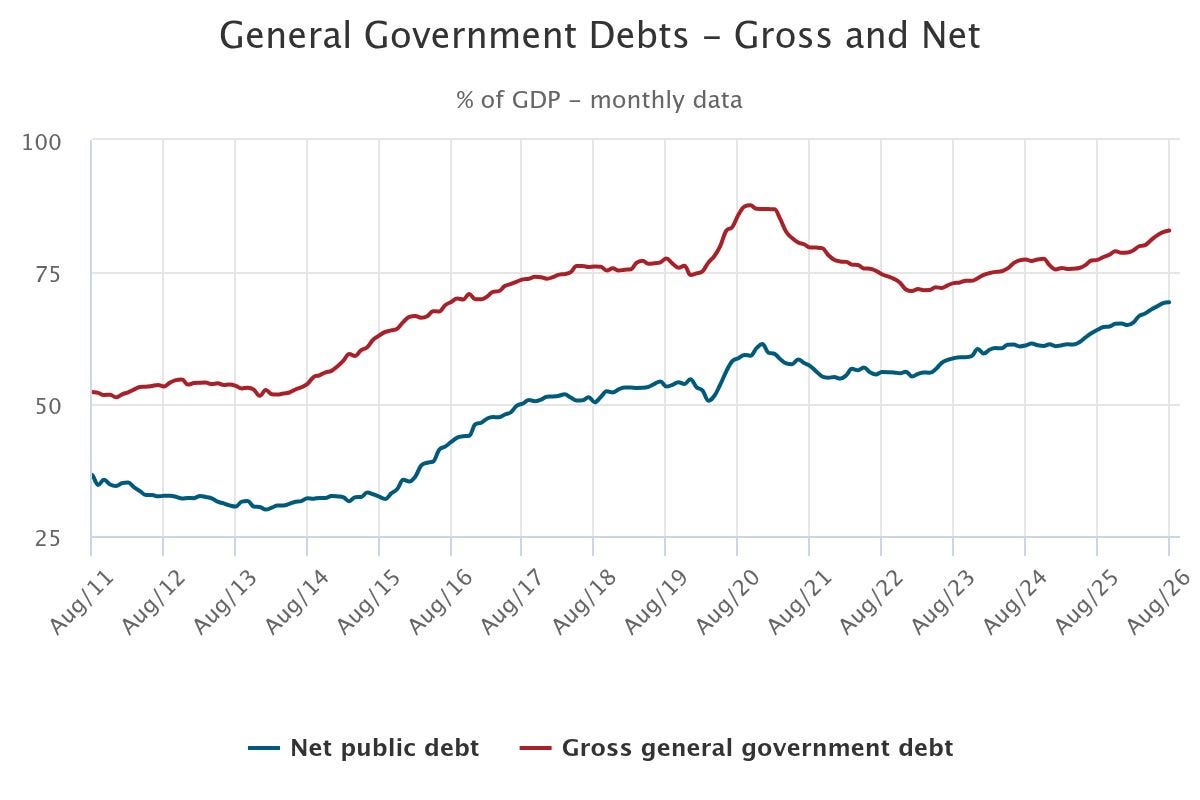
During Lula’s third term, debt as a share of gross domestic product has risen by roughly 10 percentage points, to 82.9% in August from 73.1% when he took office in January 2023. This is where Bolsonaro’s efforts come in.
Marcelo Kayath (former Credit Suisse head of investment banking in Brazil) is seen as the top candidate to take over as finance minister. After the first round, Kayath said that the local asset rally reflects hope for an economic overhaul, but should not be viewed as a blank check from investors. “It’s a change in expectations, not a definitive assessment of a government that hasn’t even begun.”
Brazil needs to break the fiscal feedback loop it’s currently in. Proposals under discussion suggest Bolsonaro’s economic team is considering a package to curb mandatory spending and deliver an initial fiscal adjustment of about R$250bn ($50bn), or 2% of Brazil’s GDP. The core measures would decouple increases in pensions and another set of continued benefits from real gains in the minimum wage, and eliminate constitutional spending floors that link health and education expenditures to federal revenue.
Under the plan, any above-inflation increase in the minimum wage for active workers would not necessarily pass through to pensions and other benefits, which could receive smaller increases or adjustments limited to the INPC inflation index. Health and education spending would instead be adjusted for inflation.
The difficulty of these spending cuts is that over 90% of primary spending is mandatory. Discretionary spending cuts alone won’t be sufficient, words from Kayath himself.
Going forward, right-wing victories in Brazil’s Congress and key state races will help Bolsonaro advance his economic agenda. The senator’s Liberal Party will hold 28 Senate seats starting next year, making it the chamber’s largest caucus. However, this strength doesn’t replace the ability to build a majority. An economic reform agenda won’t pass solely on the strength of one party.
The first-round rally priced in political change in Brazil, but not necessarily the fiscal adjustment to justify it yet. So, where do markets still offer sufficient compensation for the uncertainty around fiscal delivery? The answer differs across asset classes.
In rates, slowing growth give the BCB room to cut and ease yields at the short end, and the fiscal concerns mentioned above, if efforts succeed, would allow long-end yields to come lower. The real benefits from high carry and supportive external balances, while equities have the potential for further upside through multiple expansion as the cost of capital falls. Each area offers a different way to express the same underlying thesis, with a different degree of election risk already priced.
We start our macro memo with rates, where the fiscal premium is arguably most visible, and where the asymmetry could still be largest.
Rates: The Cleanest Expression
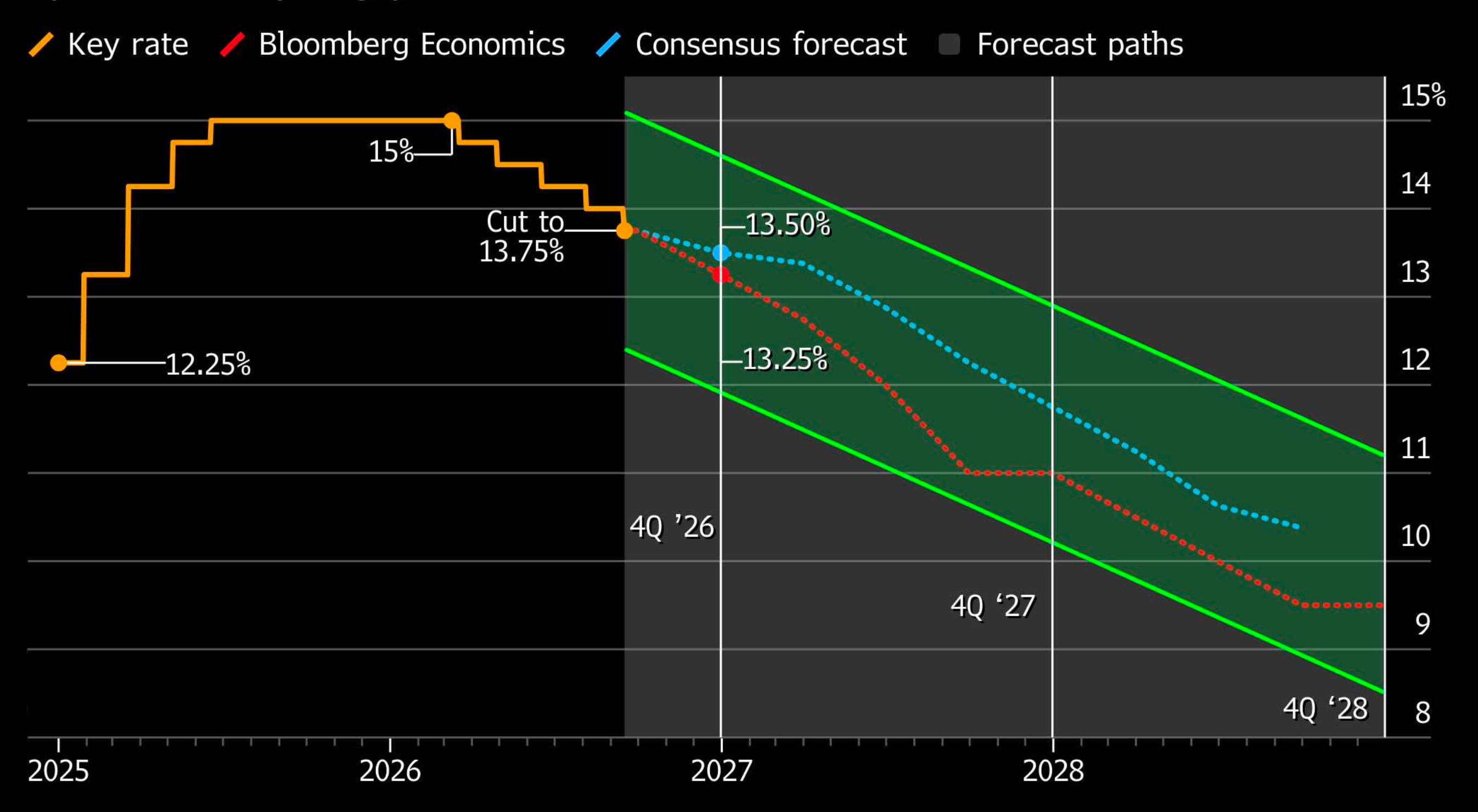
The BCB cut the Selic to 13.75% in September, its fifth consecutive reduction and 125bps of cumulative easing since March. On forward guidance, the bank has pledged to keep monetary policy tight as above-target inflation eases and risks from global price shocks persist. Although monetary policy has played a decisive role in the disinflation process, demand is still driving inflation, so policy mustn’t loosen too much.