

The IPO market is back, though not quite as some would like to describe it. As SpaceX edges closer to its offering, only more attention will be given to the space (if we can call it that) behemoth and other AI devils darlings that are close in tow.
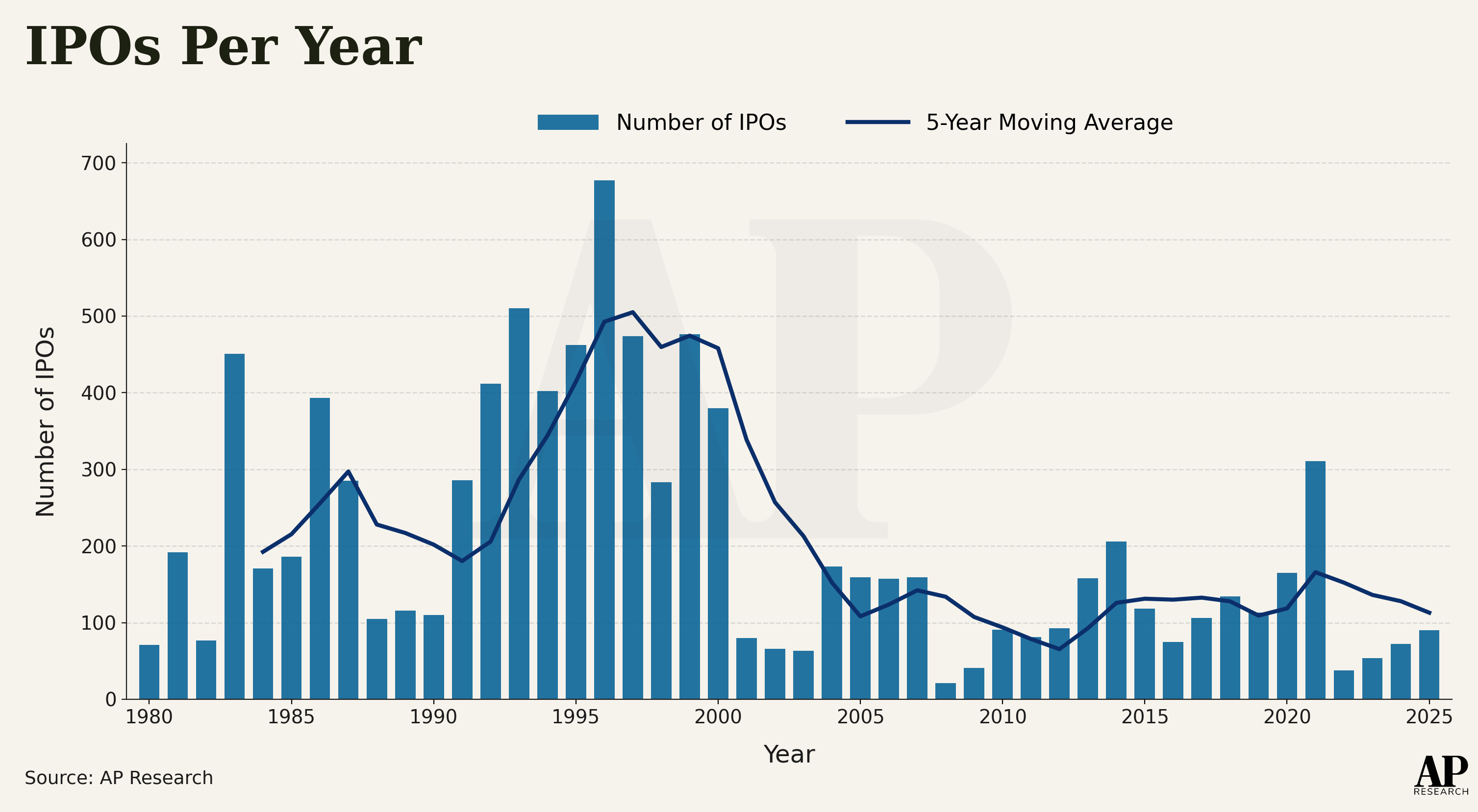
On paper, issuance is still a long way from the madness of 2021. US IPO volume has edged higher in recent years, but the five-year average remains near its lowest level in four and a half decades.
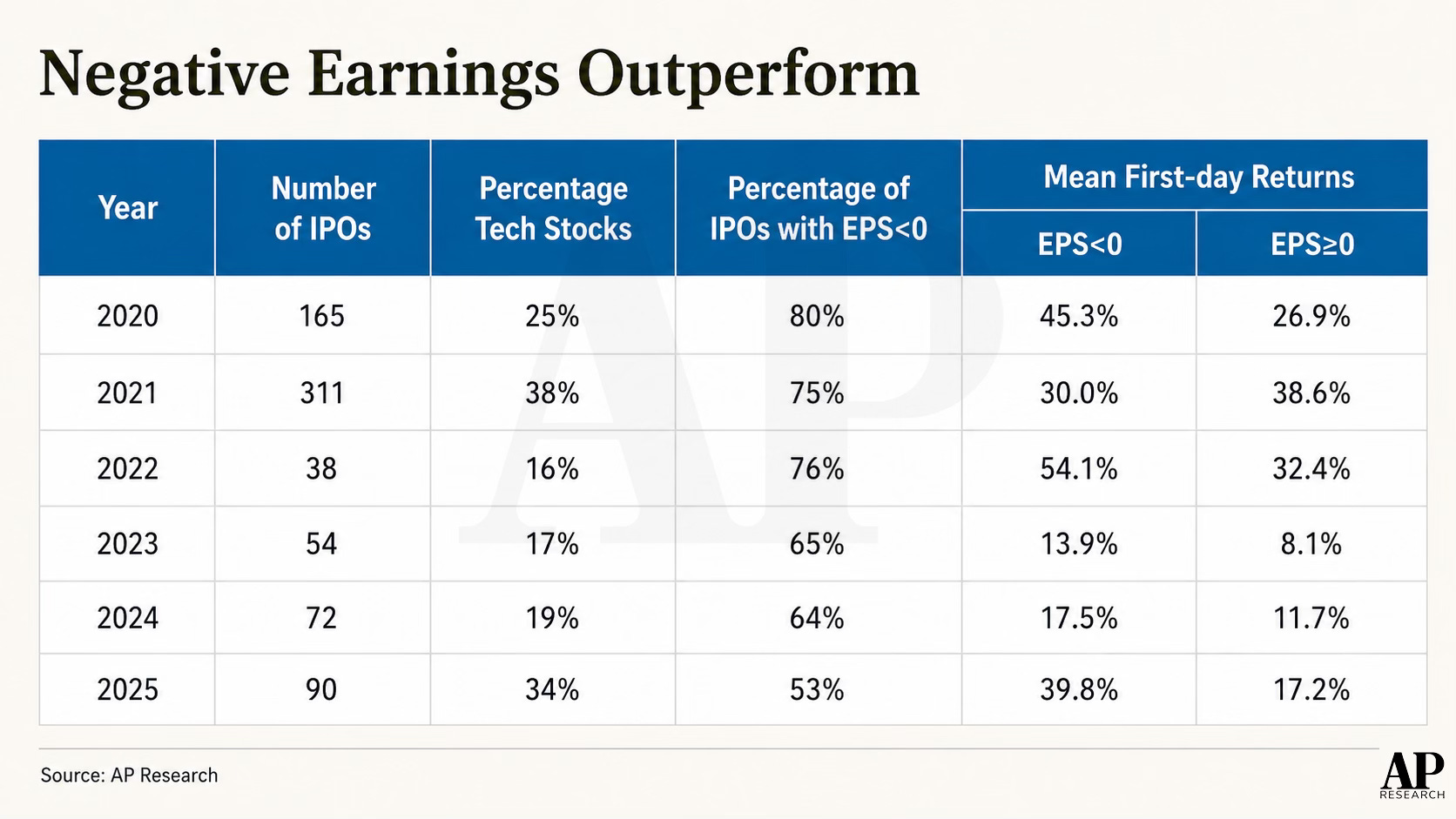
A few aftermarket stats: mean first-day returns (equal-weighted) were 11.9% in 2023, 15.3% in 2024, and 29.3% in 2025.
More revealing still is the quality of the appetite. 53% of 2025 IPOs had negative trailing earnings, and the loss-making cohort enjoyed mean first-day returns of 39.8%, against 17.2% for issuers with positive EPS. That trend tracks back in five of the six years this decade. Markets react as much to narratives as they do to fundamentals.
Ahead of the big release, we wanted to run through some comments on Musk’s history of selling narratives, some equity market plumbing on float size and Nasdaq inclusion/S&P exclusion, and the read-throughs for the upcoming AI IPOs.
Not Just a Space Company
In 2018, SpaceX President Gwynne Shotwell said that the company would not go public until it was flying regularly to Mars. Musk himself had echoed a similar thought over the years. For a space company, that makes sense. Having to stand up and explain your quarter to shareholders has its drawbacks. And for a research-heavy, capex-heavy company, focusing on engineering progress matters far more than quarter-to-quarter bottom lines. But that old logic has collided with a new reality. The dream has got bigger, as has the bill.