

The geopolitics of the Middle East have long functioned like a high-stakes game of Texas Hold’em where the deck is stacked, and the players are prone to throwing the table over. But as of this week, we have reached what might be called the “Art of the Deal” moment of the current crisis.
A ceasefire in Iran has come closest to fruition since the escalations began in late February. However, in keeping with the current administration’s preference for maximalist leverage, this isn’t so much a white flag as it is a tactical timeout defined by an aggressive “15-point plan.”
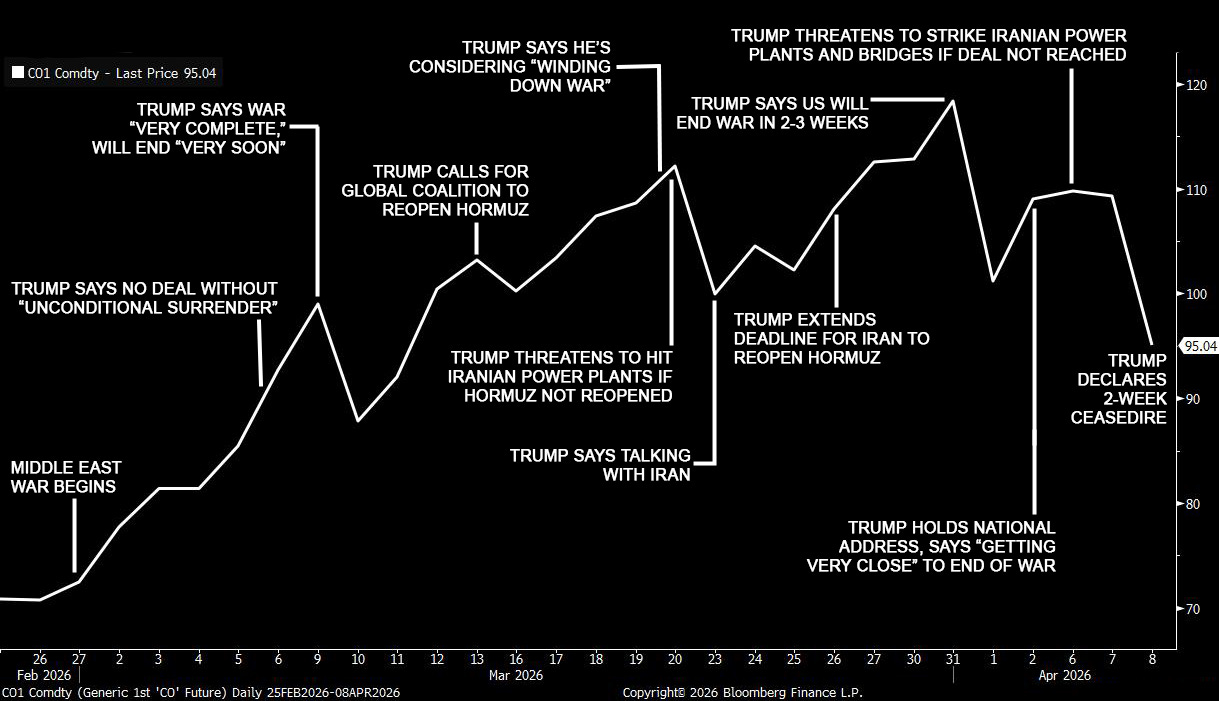
From “Obliteration” to “Optimisation”
For the markets, the shift is strong. We were staring down the barrel of a Tuesday evening deadline, the point at which the Strait of Hormuz was either to be reopened or the Iranian military was to face what President Trump termed an “obliteration” attack.
Instead of the fireworks, we got a two-week, “double-sided ceasefire.” The geopolitical risk premium in Brent is currently being re-indexed. Equities, particularly those sensitive to energy inputs, can finally take a breather. We are moving from a fear of escalation regime to a sceptical stabilisation regime.
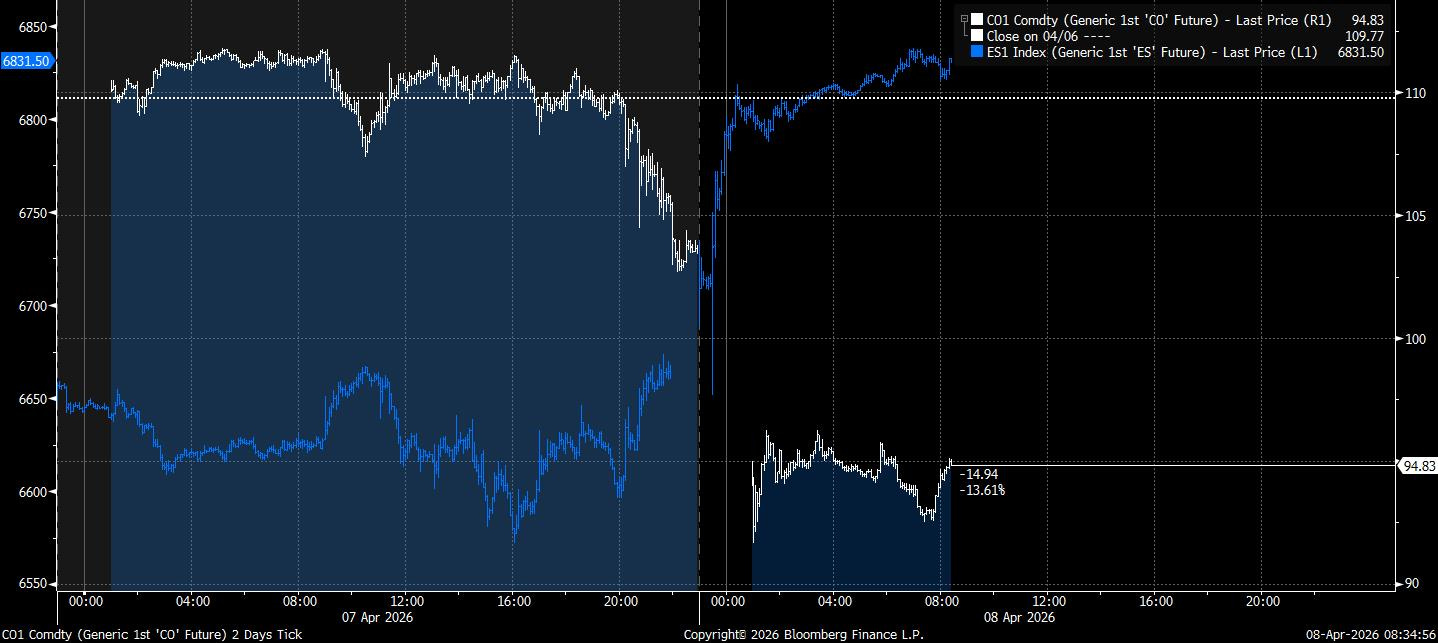
The architecture of this truce, brokered via Pakistani mediation, is precarious. It hinges on Iran agreeing to the “complete, immediate, and safe opening” of the Strait of Hormuz.
While Tehran has signalled acceptance, the devil is in the jurisdictional details. Iran has stipulated that “safe passage” would occur in coordination with their own military. In market-speak, this is counterparty risk. If the Iranian Navy is the one coordinating the passage, the definition of “safe” remains entirely at their discretion.
The 15-Point Reality
The diplomatic math here is a hybrid of two competing visions:
The Iranian 10-Point Proposal, which Trump surprisingly called a “workable basis” for negotiations.
The US/Israel 5-Point Overlay, the “hard” conditions regarding regional proxies and nuclear enrichment.
Combined, this 15-point plan represents a messy Venn diagram. Some points overlap (opening the Strait), while others (disarming Hezbollah) remain total non-starters for Tehran.