

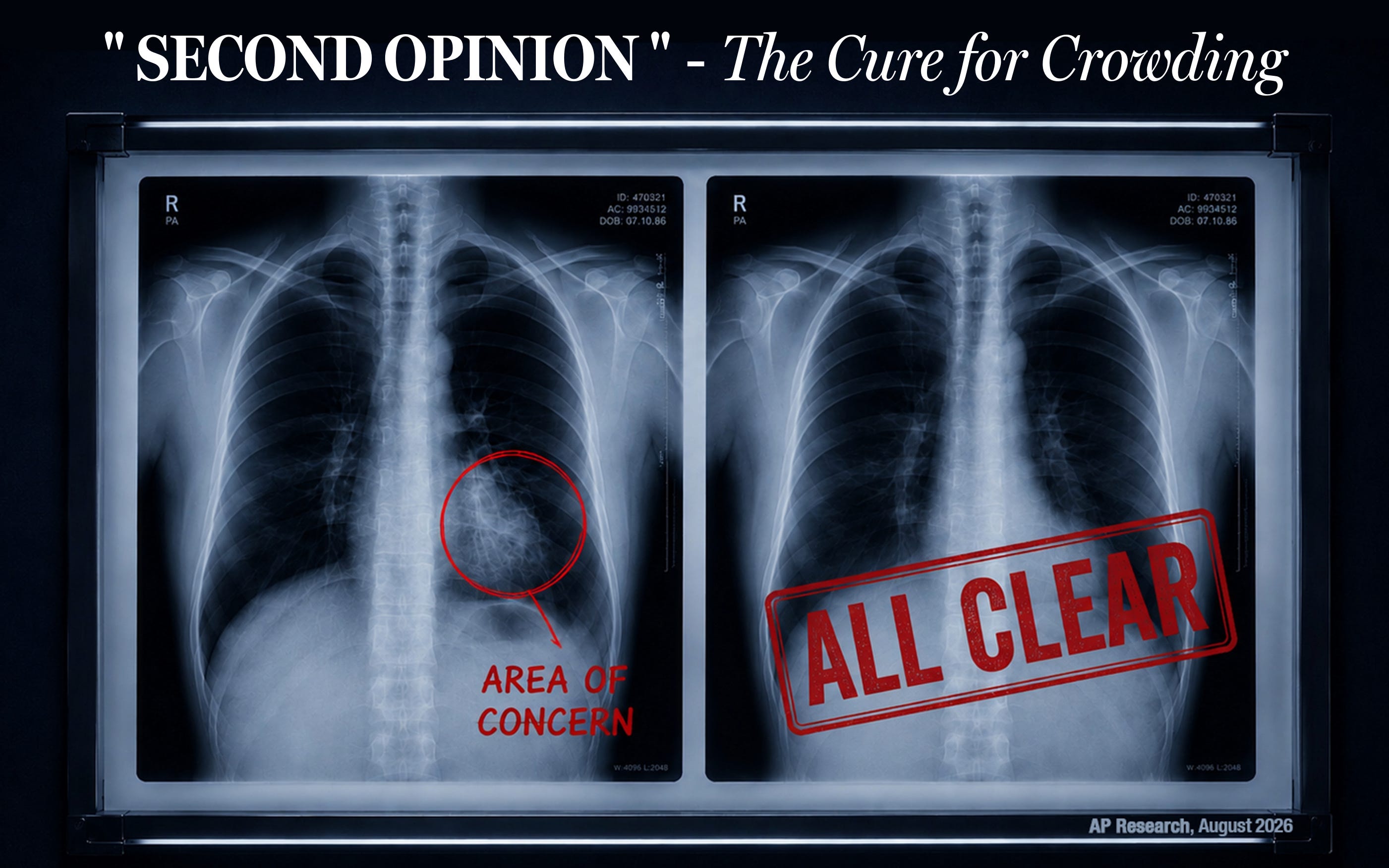
The past few years have been bogged down by AI thematics, leaving little room for markets to explore opportunities elsewhere. That’s not to say they haven’t existed, but one had to search past the noise to find these opportunities.
Of course, markets never turn up on an opportunity for durable growth, and we see healthcare as an under-appreciated market theme. It offers a rare combination of durable growth, Technology-like profitability, attractive valuation and diversification away from concentrated AI and AI-adjacent themes.
For much of the past three years, capital has been singularly focused on the momentous shift in the technology landscape, the biggest change since the start of the millennium. Whether it be building the models, semiconductors and other parts of the supply chain, or data centre buildouts, markets have judged and rated themes based on their proximity to this overarching narrative. Healthcare, conspicuously distant from the centre of the enthusiasm, became a popular funding source for the market’s most crowded positions.
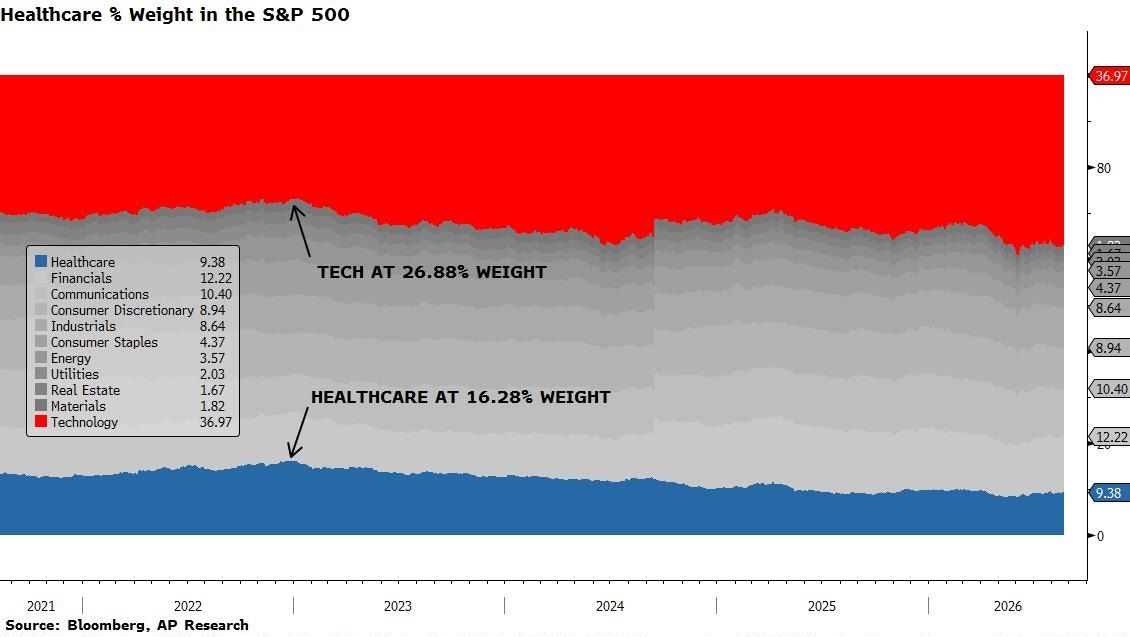
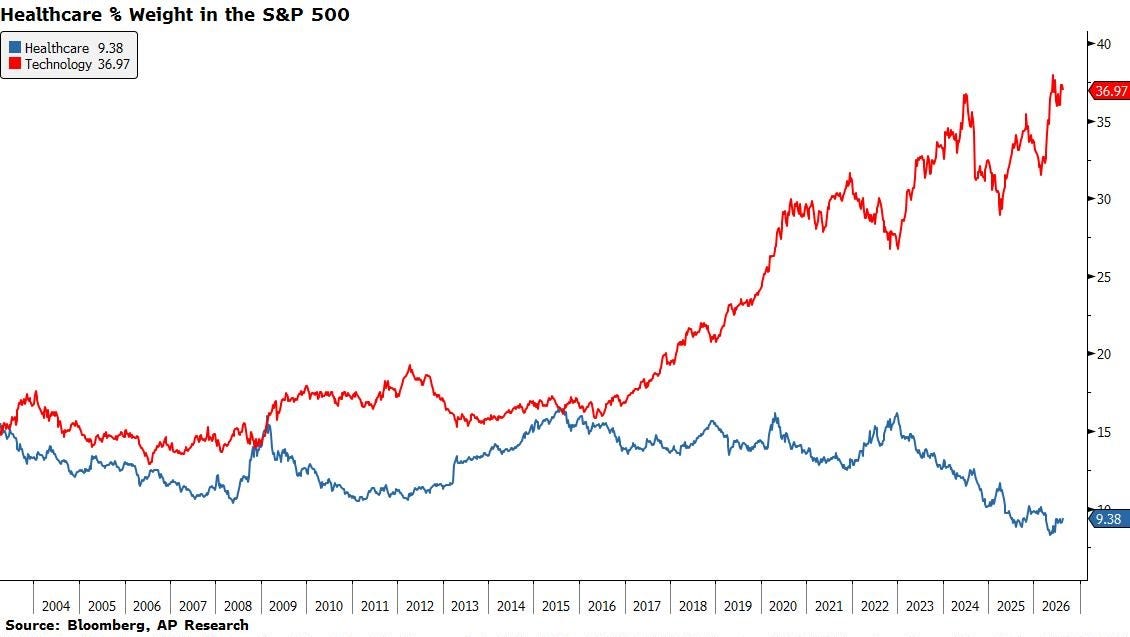
Performance has underscored this dynamic. If we mark the release of ChatGPT as the unofficial start of the tech trade, US healthcare stocks have underperformed the broader market in every calendar year. On five occasions, healthcare has experienced drawdowns of more than 10% even as the market moved higher. Sector weighting in the S&P 500 index has fallen from 16% to 9% (see Figure 2), moving from the second-largest constituent to the fourth-largest (see Figure 1).
A wholesale demotion.
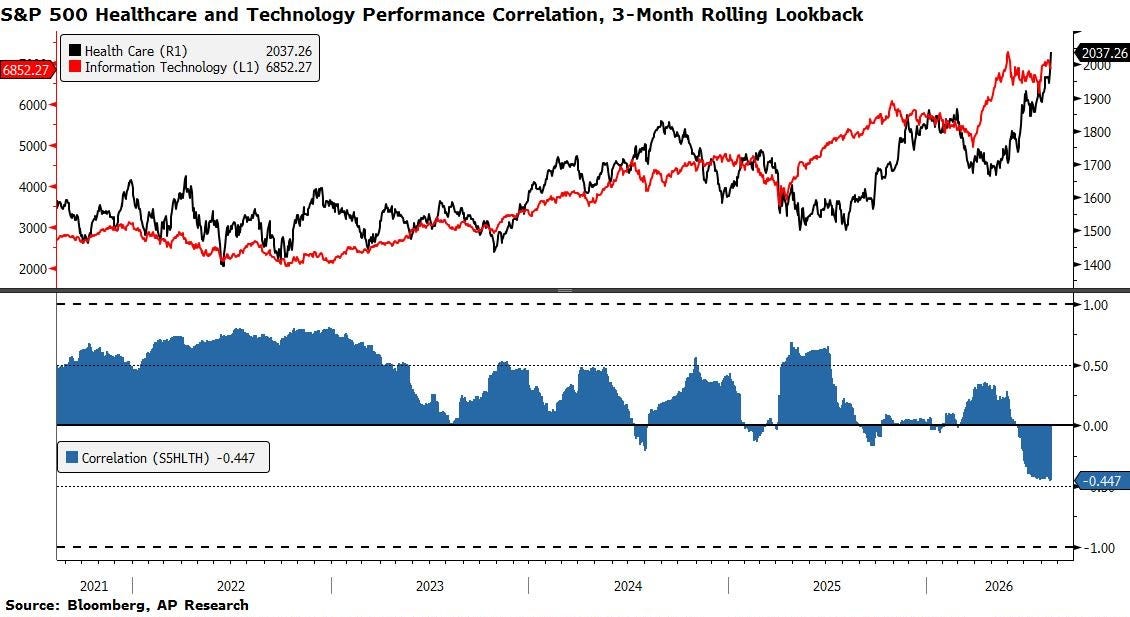
There have been reasons, beyond a hot theme appearing, for healthcare to underperform. Drug pricing reform, reimbursement pressure, Medicaid cuts, and policy uncertainty (initially DOGE1, then tariffs, alongside ACA2 exchange policy) have all weighed on sector sentiment. Investors have also begun to question margin compression, viewing AI as a compressor rather than an improver.
That has led to a deeply negative 3-month correlation (see Figure 3) between Healthcare and Tech, and one of the largest positioning resets in the sector’s history.
Neglect eventually creates opportunities. Healthcare stocks trade at a discount to the broader market, near the 26th percentile of its historical range. Many of the concerns that weighed on sentiment have either moderated or have been reflected in valuations. Earnings growth (inflecting up from -1% in 2026 to +22% in 2027) is expected to be among the largest contributors, outside of technology, to S&P 500 growth next year. A potential gridlock outcome in the coming midterms could alleviate concerns around policy uncertainty, while the bar remains low for potential upside surprise from AI productivity improvements.
Following this period of underperformance, we believe the balance of risks has shifted in favour towards US Healthcare. Not all of its problems have disappeared, but the dynamics have shifted enough to expect the next phase of the recovery to be increasingly driven by stock selection.
With sector weights, active ownership, and relative performance still near cyclical lows, Healthcare appears better characterised as a recovery opportunity, particularly as investors seek to broaden exposure beyond AI-driven market leadership.
Under Owned
The positioning backdrop is fundamental to our exploration of Healthcare as an overweight allocation. As the sector lived through a prolonged period of underperformance, Healthcare has become a main funding short against AI exposures (see Figure 4). Per S3 data, short interest remains near five-year highs and has steadily increased over that timeframe as markets crowded into AI names. This has also led to an increasingly negative correlation between Healthcare and Technology.
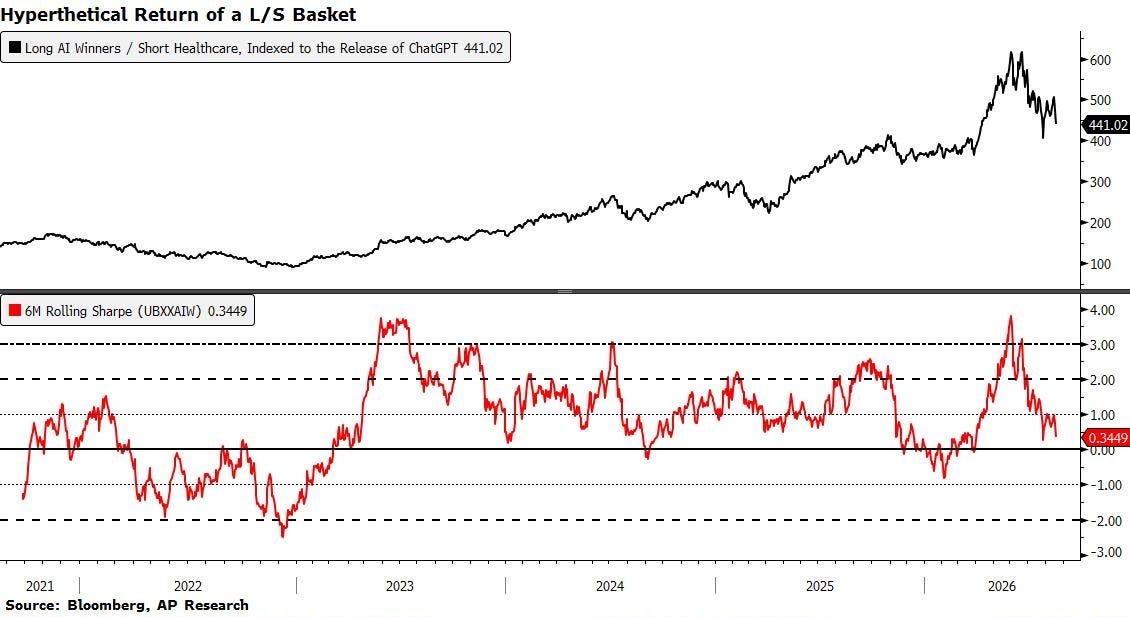
Even with recent relative outperformance, Healthcare remains one of the least crowded areas of the market, while Tech and AI remain at elevated levels by historical standards. Within Healthcare, Equipment & Services remains deeply under-owned, with net exposure in the 3rd percentile of the past 12 months and just the 1st percentile versus the full history since 2018.
We expect capital flows to be a tailwind for this trade. Healthcare ETF flows appear to be turning in favour of investors (see Figure 5), something that had previously been a significant headwind to sector performance. ETFs have received $6.4bn of net inflows over the past 12 months, representing 6.3% of ETF AUM. This is the first time that flows have been significantly positive since early 2023. The largest three US ETFs are shown below.
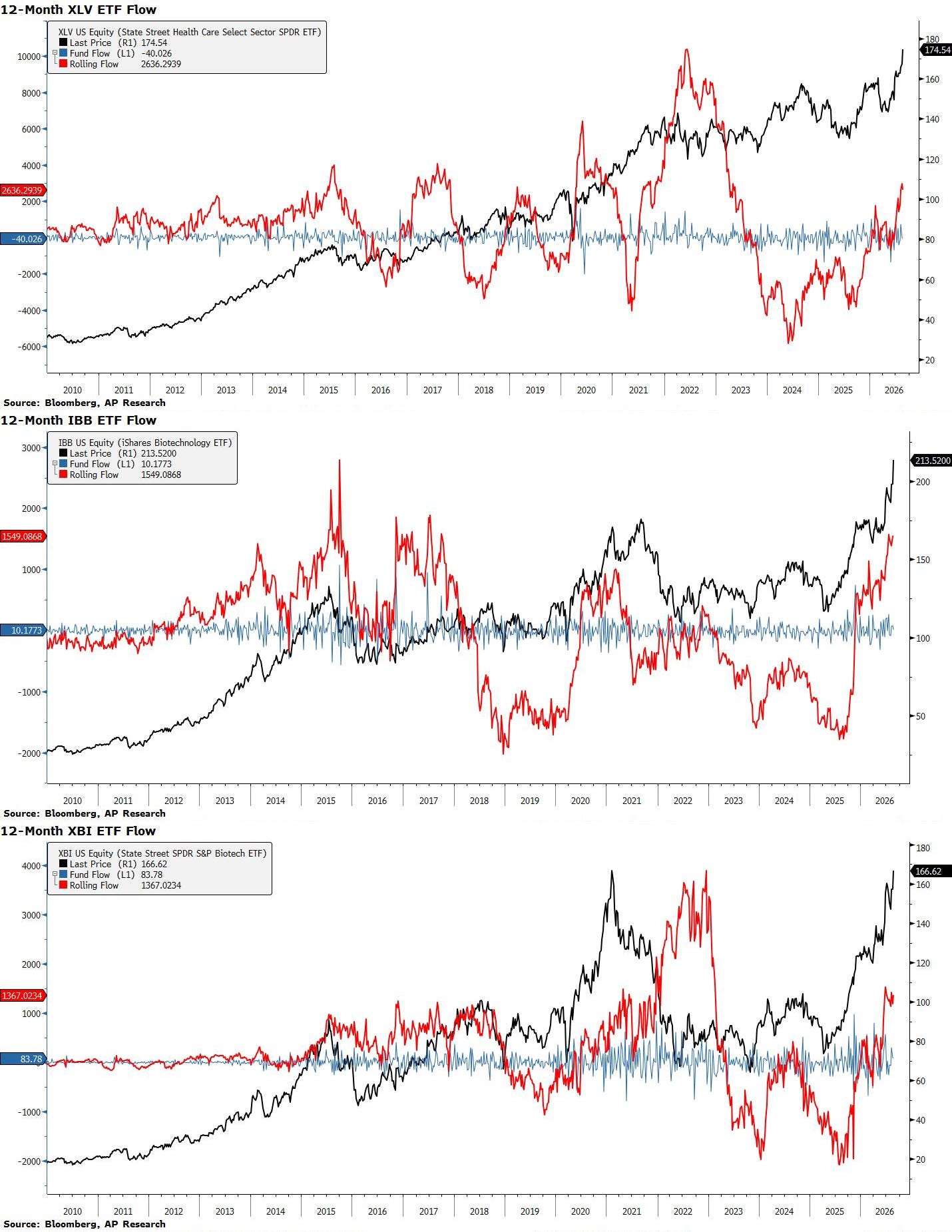
This combination of funding shorts, low crowding, and structural inflows points to a positive backdrop for Healthcare outperformance and an increasingly attractive allocation away from crowded themes.
Inexpensive
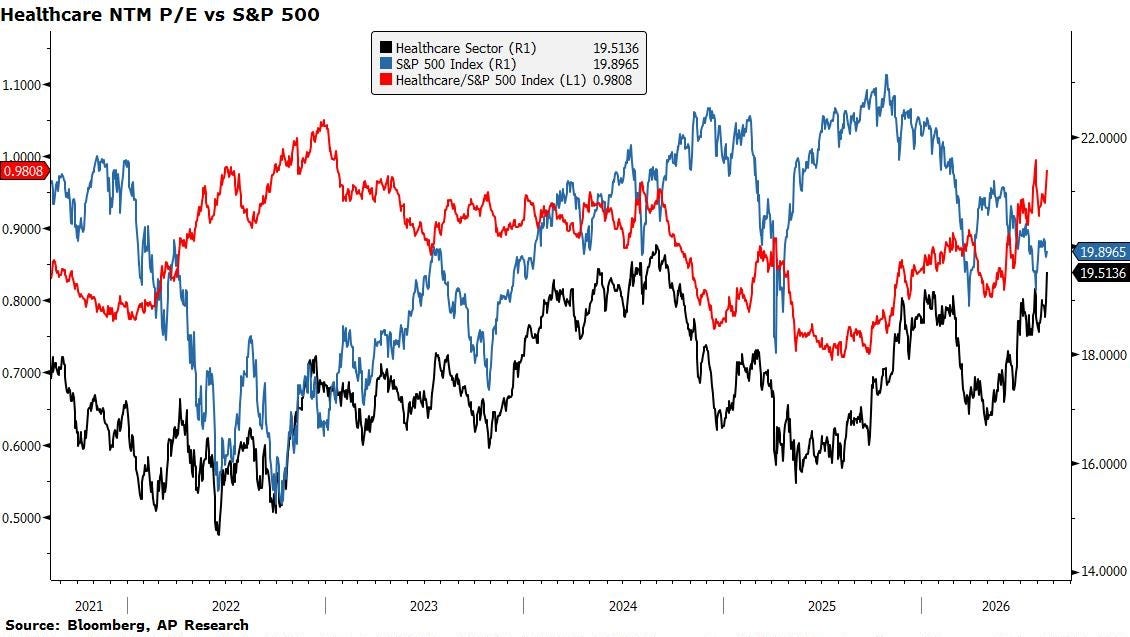
Alongside a constructive positioning backdrop lies an inexpensive valuation. We often argue that expensive valuations are no reason to under-own stocks, so the same should be applied to the opposite. Cheap valuations are no reason, on their own, to hold an asset. We view valuations as a breeze. A high valuation means you are unvesting with the wind in your face. Healthcare, at its current rate to history, is a gentle breeze to our backs. Always welcomed.
Like many sectors in the S&P 500, Healthcare is expensive relative to its own history, but remains fair relative to the broader market (see Figure 6).
These valuations not only attract public market investors, but may also create a more constructive M&A backdrop. Healthy balance sheets, accessible capital markets, ongoing innovation (not even including the potential for AI to enhance this innovation), and a need for large companies to replenish product pipelines should support acquisitions, particularly in Biotech.
Combined, fair valuations and potential catalytic drivers add to Healthcare’s high-quality growth, an area overlooked amid the AI trade.
Poised to Accelerate
Looking towards 2027, the sector is expected to deliver steady revenue growth, but earnings growth is poised to accelerate significantly as margins recover. Consensus estimates see revenue growth of 5%, while net income is expected to shift from -1% currently to +22% in the upcoming year.
Healthcare is expected to have the largest contribution to earnings growth in the S&P 500, second only to the Tech sector. Due to pricing power, the sector enjoys tech-like margins and remains much higher than defensive peers. Most Healthcare industries earn margins north of 20% given patent protection and scale, while Biotech (25.4%) and Pharma (26.2%) generate among the strongest margins of all S&P 500 industries.
As for inflation factors, Healthcare margins remain insulated from rising costs, especially components like agriculture and energy, due to the industry’s limited exposure, whereas other defensive peers, namely Staples, are some of the largest users of commodities.
Demand Drivers
Healthcare has three fundamental demand drivers that support growth in the sector: an ageing population, rising life expectancy, and continued expansion of the middle class.
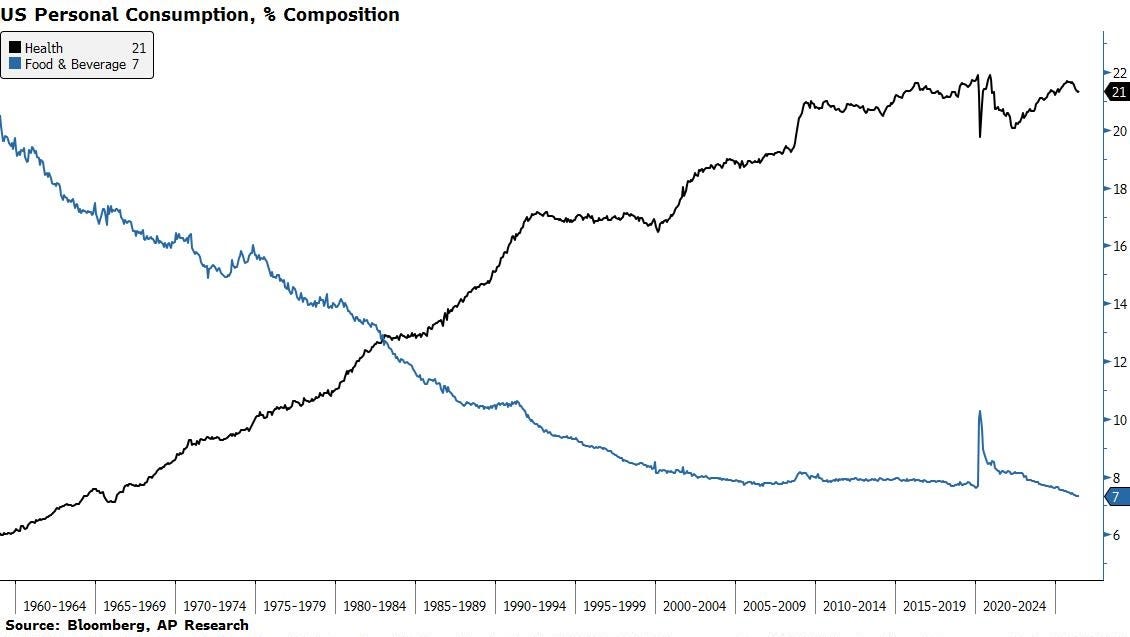
On the latter point, within the US, Healthcare expenditures as a portion of consumer spending have risen from 5% in the 1950s to 21% as of today (see Figure 7). In contrast, food and beverage spending has decreased from 21% to 7% over the same period. This sustained shift in spending has driven exceptional growth in Healthcare revenue. Since the GFC, Healthcare has generated the second-strongest revenue growth of all sectors, with a 9.2% CAGR vs 5.3% for the S&P 500.
Of course, rising energy costs and inflation concerns are a risk to this measure. These concerns could weigh on discretionary spending and potentially crowd out healthcare spending in the short term, but dynamics could offset this. A shift in spending demographics, along with strong household savings and rising wages, should keep discretionary spending resilient despite macro concerns.
These structural demand advantages have led to consensus estimates of mid-single-digit revenue growth over the next two years. This reinforces Healthcare’s position as an attractive source of durable growth, especially one outside of AI risks.
Midterms
One overarching question in any thematic report in the coming months is connected to the US Midterms. What effect do the Midterms have on the market in general, and specifically towards Healthcare?
While Midterms are often the weakest-performing year in the four-year cycle, performance has been dispersed by sector. Healthcare (10.7%) and Energy (8.9%) have historically held up better, while Industrials (0.6%) and Financials (-0.6%) have tended to drag the market down in midterm years.
Election outcomes, of course, matter. Scenarios where one party lost control of the political trifecta (holding the presidency, and majorities in the House and Senate) saw material underperformance in the six months after midterms (10.4%) compared to when control was gained, or Congress remained divided (16.1%). Thus, the market has still rallied, but it was likely hampered in part by the market re-pricing the expected ability of the government to pass legislation. This, in particular, is key to our thematic.
While healthcare affordability and OBBBA-linked3 Medicaid changes are likely to be included in the political discourse heading into the midterms, we do not see a material change in Washington towards the health policy backdrop. Why? Given limited incentives to compromise between the Administration and Democratic-controlled chambers of Congress, we believe other economic and affordability concerns are more likely to be more central and more impactful in voter behaviour. Therefore, we see minimal policy risks for the Healthcare sector in the coming months.
Sub Industries
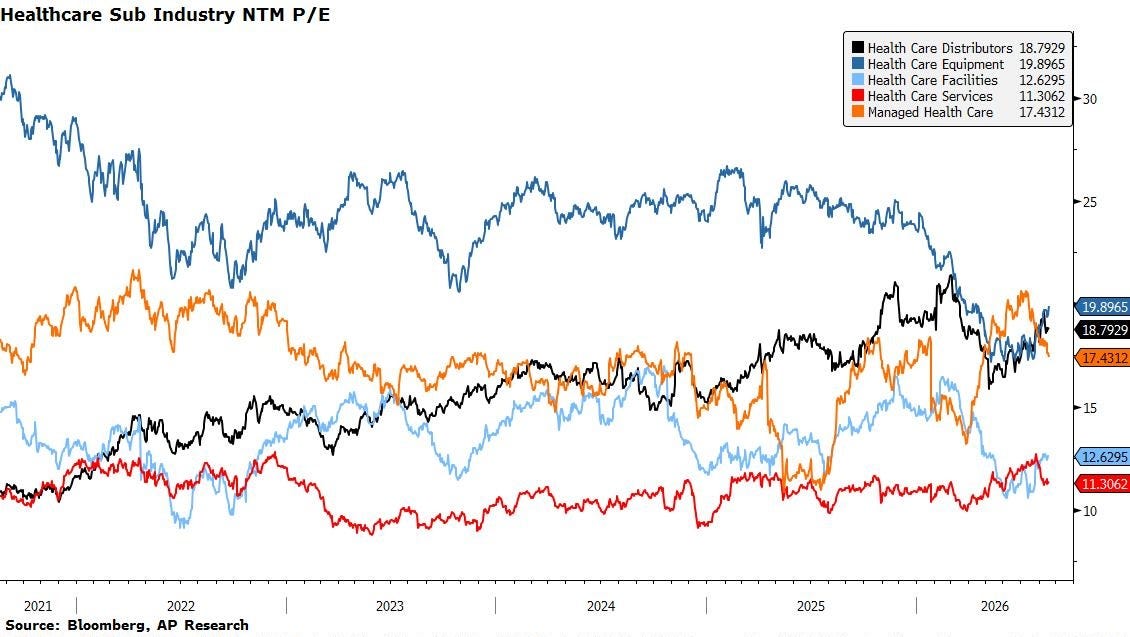
US Pharma remains healthy (no pun intended there). 2026 has been a solid year with upside to estimates. For the upcoming calendar (18 months), Pharma has a rich pipeline and minimal policy risk after the late-2025 MFN4 agreements. The sub-sector also trades at a 10% discount to the broader market, with potential for multiple expansion on improving sentiment.
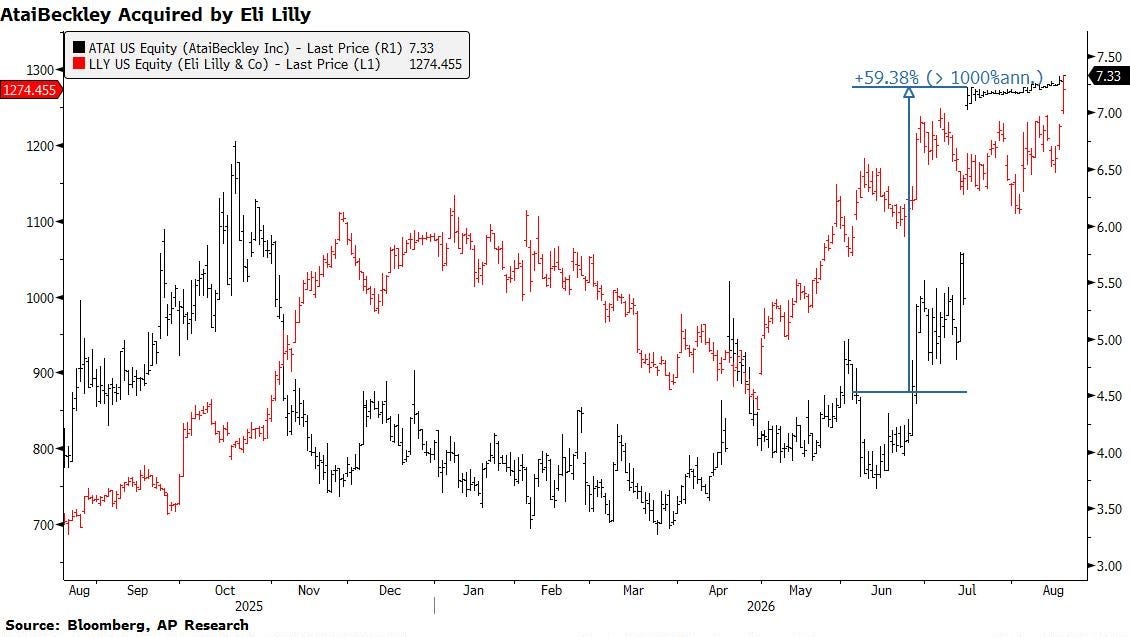
As for Biotech, performance in 2026 has been mixed. However, sentiment has turned positive, with tailwinds (M&A, clinical catalysts) balanced against headwinds (regulations, rates). As for our recent calls within Biotech, we have now closed out of AtaiBeckley (ATAI US) following its acquisition by Eli Lilly (LLY US) (see Figure 9), marking a 59% return in just over one month.
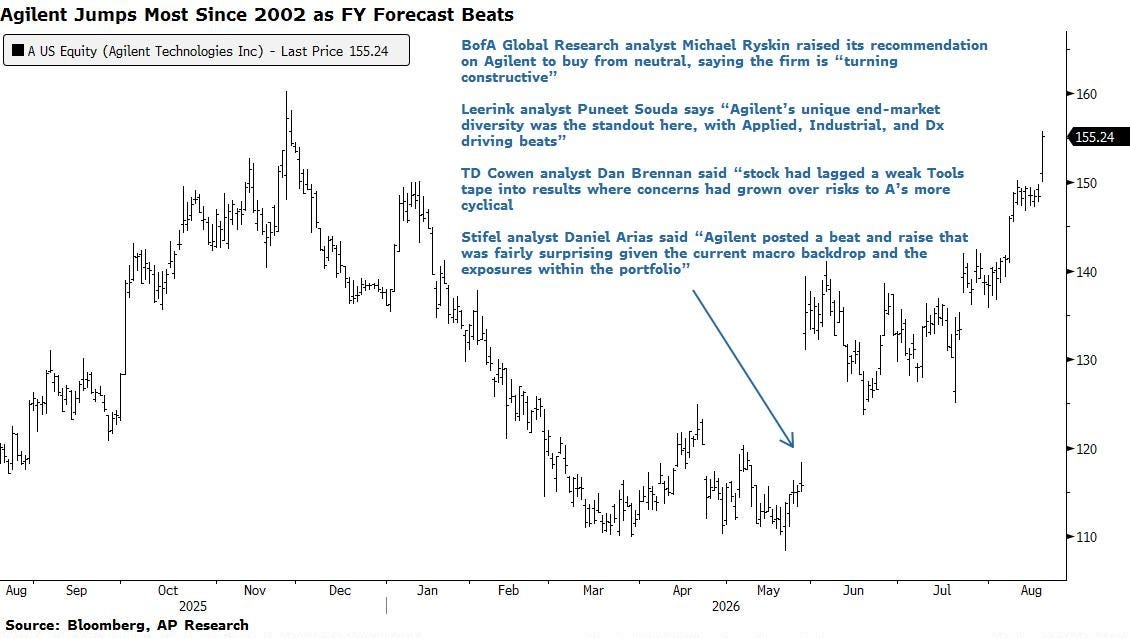
Life Science Tools has underperformed YTD, with the end-market lagging in any recovery and minimal generalist appetite against AI, semis, or memory. However, Agilent’s (A US) move higher (see Figure 10) in May following its earnings call highlighted a change within this sub-sector.
After a three-year losing streak to the broader market, MedTech is either broken or undervalued, depending on who you ask. Decelerating growth, negative revisions, and a thin calendar have weighed on it this year. The potential as an AI hedge has done little to draw investor interest so far, but that could change if it becomes part of a recovery trade; support would need to come via positive 2027 estimates and new catalysts.
Managed Care may have hit a turning point. We see most MCOs troughing on earnings in 2026 (or already in 2025), setting up upward revisions, with Medicare Advantage a likely margin-upside driver and early signs of positivity in tougher products. Distributor volumes support growth at or above targets. Across facilities, conditions remain stable despite ACA/Medicaid headwinds.
Finally, the area of Healthcare most prone to AI risk: Vertical SaaS and HealthTech. This remains the most cautious sub-sector while the market still finalises its decision and quantifies ROI. The dynamic is driving investors to differentiate between “AI that sells” (revenue expansion) and “AI that saves” (measurable efficiency, lower cost-to-serve).
Now to the part of the article that puts the research and the thesis into action: our Second Opinion Thematic Basket.