

The move higher in long-dated gilts can’t simply be dismissed as a correlated global move driven by the Middle East-induced energy price shock. Rather, gilts are increasingly trading as the market’s preferred instrument for expressing doubt about Britain’s political capacity to maintain fiscal discipline while also absorbing the energy shock.
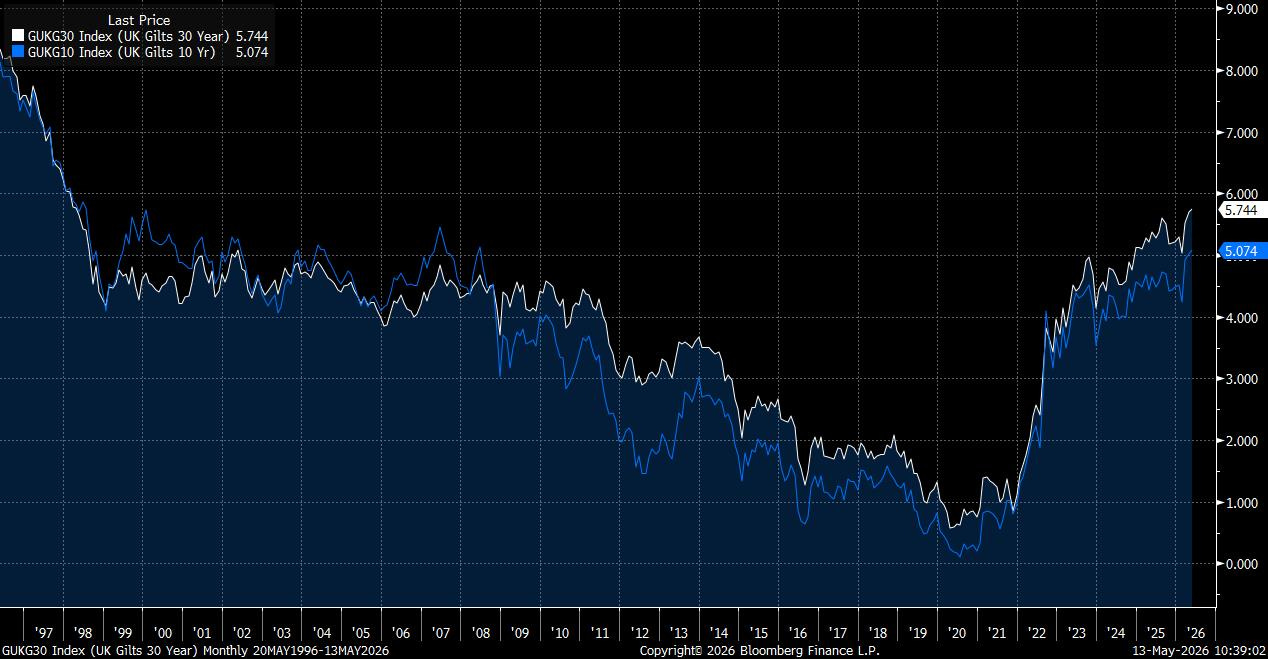
The additional domestic risk premium continues to drive UK yields higher. On Tuesday, 30-year gilt yields touched 5.81%, the highest level since 1998, while the 10-year reached 5.13%, the highest since 2008. Although we often roll our eyes at “the highest since” comparisons, we believe the above references are worthy of inclusion.
With Britain’s borrowing costs now the highest among rich economies, and having risen the most since the Iran war began, it’s being priced most aggressively at the long end, where fiscal risk conventionally lives. If the two-year trades around the policy actions from the next few BoE meetings, the thirty-year is all about whether the policy regime still looks coherent five to ten years from now.
Simply put, the current policy regime isn’t sustainable, and we believe we could be close to a serious yield melt-up that could cause significant headaches for the Government. But for macro traders, there’s potential for several attractive rate trades.
Election Results Fuse Politics With Duration
The short-term driver behind the latest leg higher in the UK long end came from the local election results late last week. This matters because they converted a bad macro situation into an open political one.
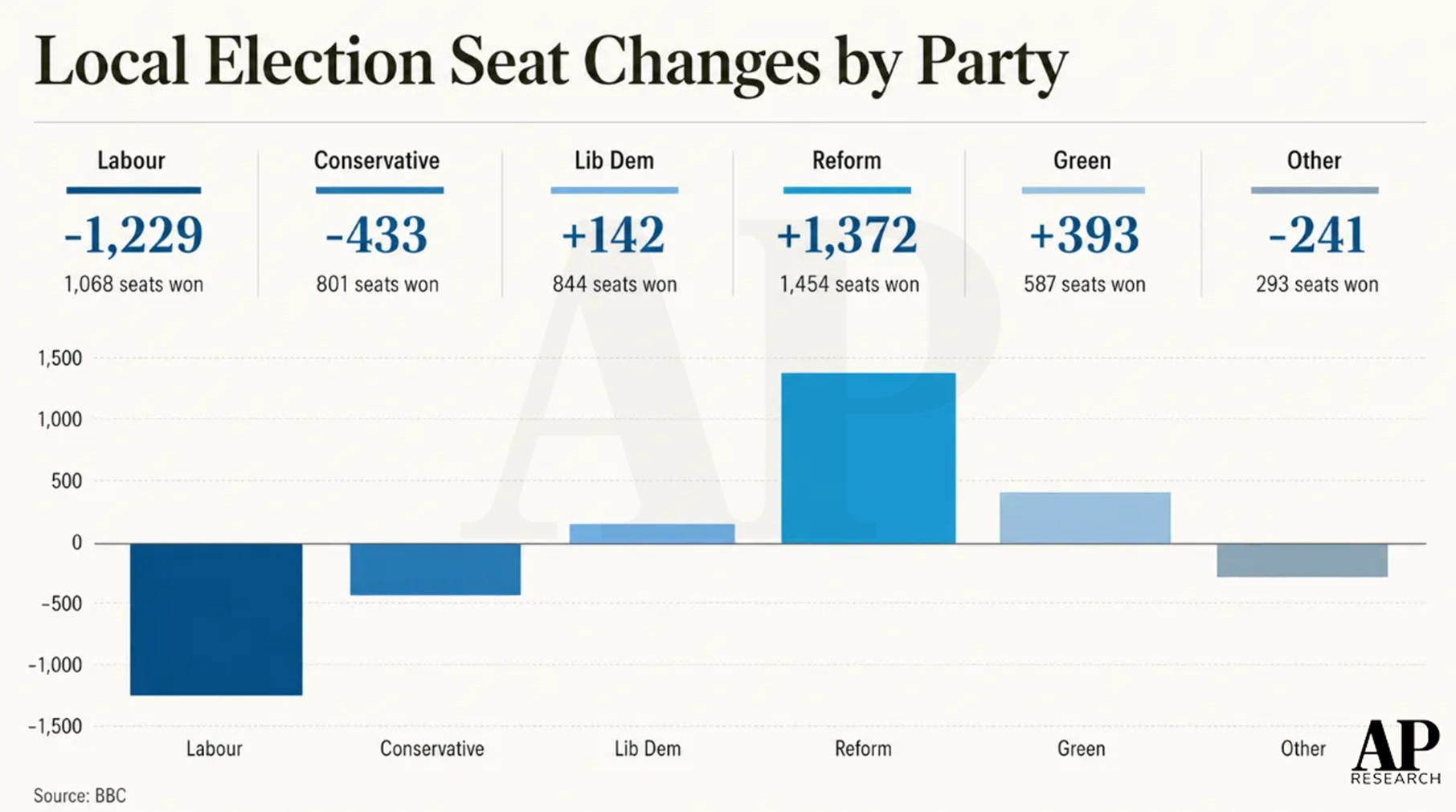
By last Friday evening, the governing Labour Party had lost 1,229 council seats, while the right-wing Reform UK had gained 1,372. It was one of Labour’s worst-ever defeats in local elections, and by Tuesday, more than 80 Labour lawmakers had publicly called on PM Keir Starmer to go or set out a timetable for departure.
For gilts, the question is what the government has to promise, spend, delay or abandon in order to make survival politically viable. Investors can see two paths leading to the same fiscal destination: the current leadership loosens policy to claw back voters, or a successor arrives with a looser bias already built in.