

After three weeks of the S&P 500 cruising higher on a cooling economy and a more dovish Federal Reserve, yields hit multi-decade highs and ended the streak.
The move had been building since early July as structural concerns such as the deficit rising, inflation staying above 3%, and a wave of AI-related corporate issuance competing for the same duration buyers compounded. The pain point was hit, and Bessent showed his hand, which we’ll speak more on later.
Across equity sectors, traditional defensive areas like healthcare and materials benefited, while energy continued to get support from elevated oil prices. Healthcare was especially lifted after Moderna’s extraordinary rally following positive melanoma vaccine data.

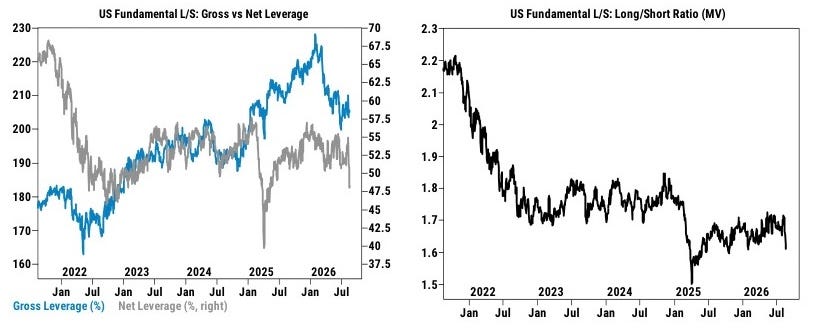
Tech stocks bore the brunt of the weakness on the sector breakdown (as well as the most $ net sold last week, per Goldman). Walmart delivered its slowest US comparable-sales growth in more than six years and guided below expectations, sending the stock down more than 9%. That view is largely comparable with the macro data, as households increasingly make trade-offs. Target had a better quarter and raised its outlook, but the broader picture remains one of uneven consumer spending.
The dollar was used as Bessent’s sacrifice, with the dollar index (DXY) falling about 1%. Bitcoin had an unlikely winning week, benefitting from the buyback announcement, lower yields, renewed liquidity expectations, and optimism following Trump’s meeting with crypto industry leaders. Gold also continued higher, with the “debasement” thesis getting a fresh tailwind.
Instead of doing several short memos on different assets, as is our usual style on a Monday, we’re combining all our thoughts into one continuous analysis this week, all focused on the knock-on effects of Bessent’s buybacks. Yields, dollar, gold.
Let’s get into the guide to trades moving markets, where things stand, and where they may be heading.
“Not QE, Not YCC”
“Summary of House Views”
Not QE, Not YCC
This title felt apt to correct any misinformation out there. This was not quantitative easing or yield curve control. The Treasury is altering the maturity and liquidity composition of the debt held by the market. More Operation Twist than QE.
Bessent’s actions in the Treasury market are likely to drive most themes in the coming days, so this week we focus on this core area while exploring knock-on effects across multiple assets. We’ll start first and foremost with Treasuries themselves.
The initial reaction saw the US Treasury’s expanded long-end buybacks deliver a bull flattener on a one-day lookback, but the more consequential market signal is that Washington has now shown its hand. On a 10-day lookback, the 2s10s curve remains in a bear steepener.
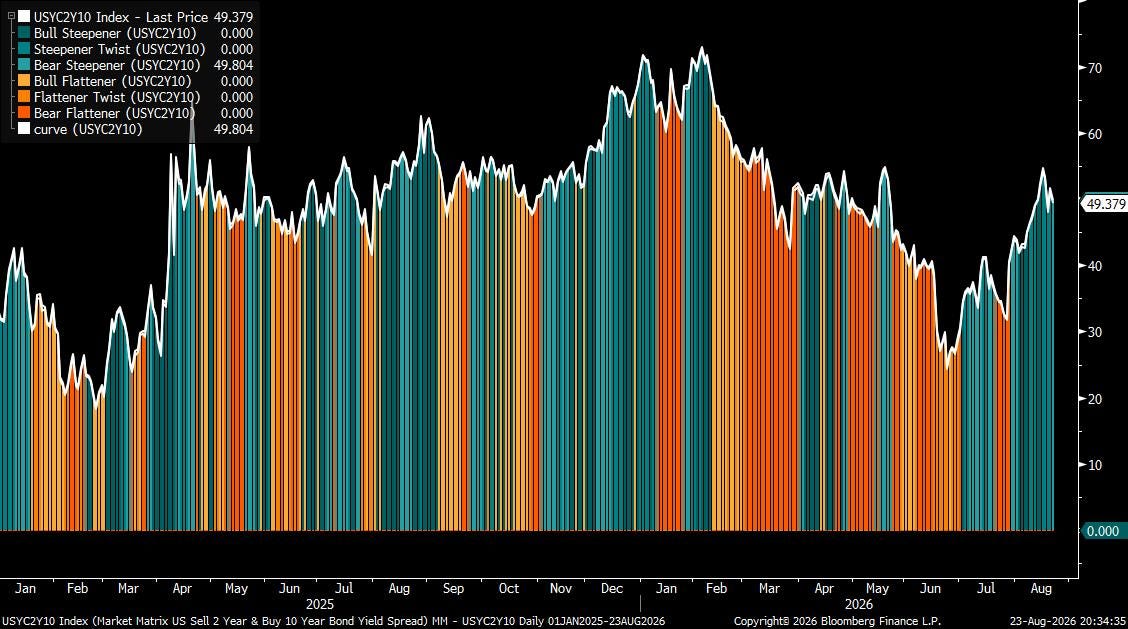
Doubling long-end liquidity support is small relative to supply, but the 10- and 30-year still had sizable reactions. Coupled with the administration’s willingness to intervene elsewhere, the message from Wednesday’s move was difficult to miss, and the size of the intervention may be beside the point. Washington is increasingly uncomfortable with the signal coming from the long end, and markets now know that discomfort exists. Importantly, pain points in markets have a habit of being revisited.
It’s an effort to lean against price discovery and compress long-term borrowing costs. That can matter tactically, particularly when positioning is stretched, but it does little to alter the forces that pushed term premium higher in the first place.
It’s all very poetic when you consider the side of a currency trade that Bessent was on in 1992. He should be fully aware of the consequences of intervention signal failure.
Running growth hot, welcoming easier financial conditions, and resisting higher policy rates is difficult to reconcile with structurally lower long yields. A higher long end is an accurate reflection of Washington’s long-term neglect to run a balanced budget. National debt now tops $40tn. As our friend Eliant likes to say, “nothing stops this train.”
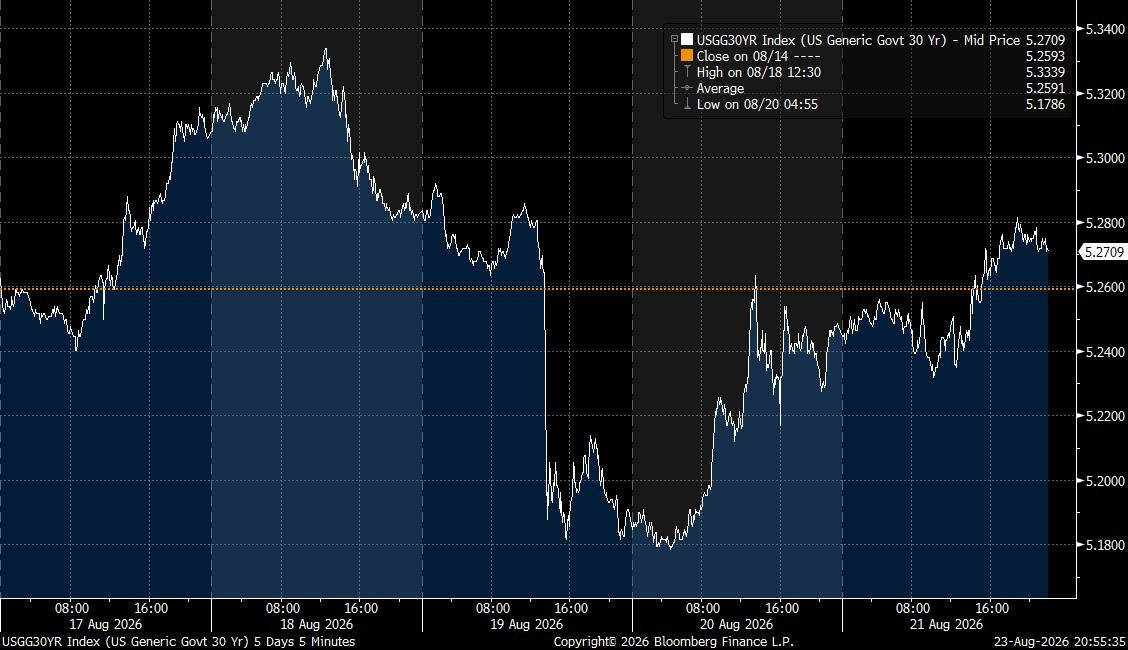
We still view steepener trades as attractive, and are in our 2s30s trade from a good entry point, but of course there are increasing risks here, that being th Treasury eliciting coordination from the Fed to provide sustained relief at the long end of the yield curve. That raises more concerns about Fed independance, but would offer enough of a showing to the market to maybe not test pain points… So far, the consequences of Bessent’s actions have been short-lived.
The other market that felt this shockwave is the dollar: Bessent’s sacrificial lamb in all of this. Rather than tackle the country’s structural fiscal imbalances, Bessent has clearly shown he’ll take the easier path and manage yields, shifting pressure from bonds to the currency.
The knee-jerk reaction from the news was to add dollar bearish positions, and the sterling and euro attracted the strongest demand. We’ll have to wait for Tuesday to see the positioning change in CFTC data, but prior to the announcement, positioning was still largely positive.
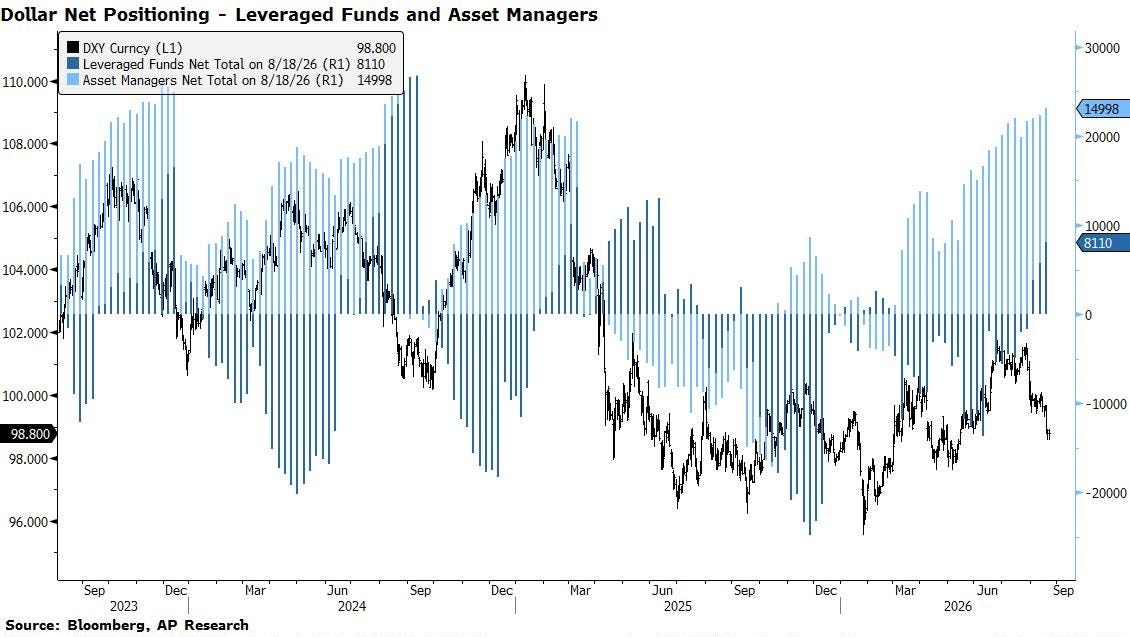
Bessent would welcome these FX movements, as the Trump administration has been praising the benefits of a weaker dollar as a way to increase US competitiveness and reduce trade imbalances.
As for under-the-hood measures, markets are paying for protection against, or exposure to, a higher EURUSD/weaker-dollar outcome. Implied volatility on the pair is still low, but 1m 25-delta risk reversals have moved meaningfully higher and are now positive (orange line below). That means risks have become increasingly one-sided toward USD weakness.
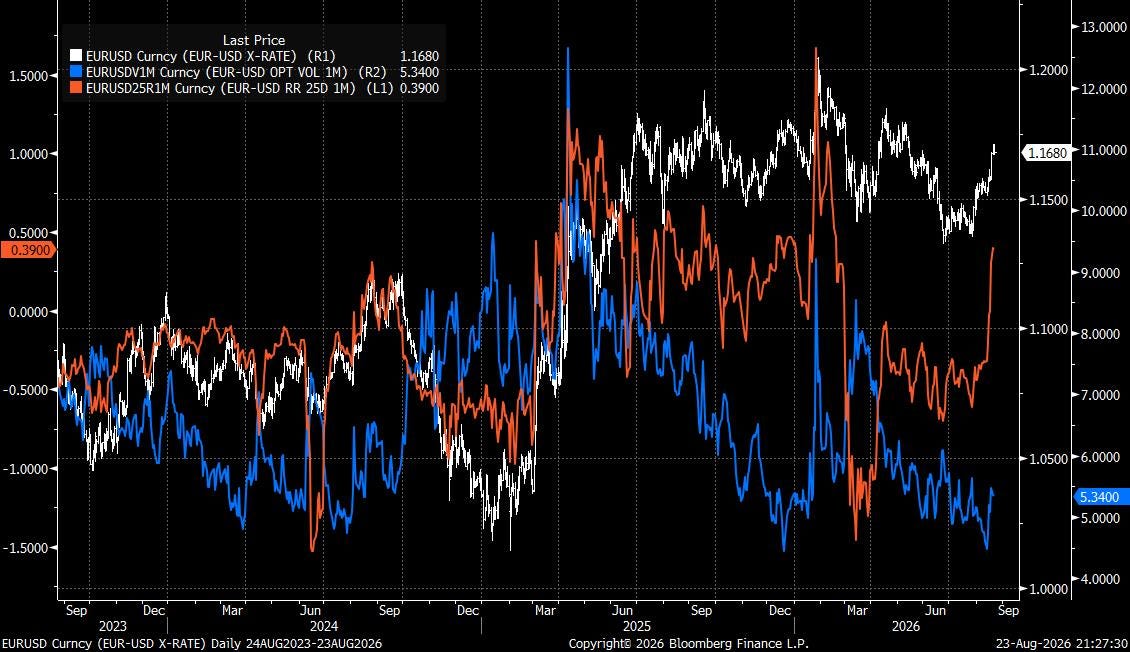
With higher risk reversals but still low implied volatility, we’re in a managed depreciation regime. If, however, implied volatility follows skew higher, that would indicate that the market is starting to view policymakers as having lost control of the move rather than a more orderly dollar sacrifice.
Gold is closely linked to the dollar, and much has been said about fresh tailwinds for the “gold higher” camp and the debasement traders.
It’s been a good couple of weeks for bullion. The precious metal was already on course to log its best month since February before shooting higher on Wednesday. The rebound from a year-to-date low in June has coincided with a pullback in US two-year yields from their recent peak as traders pared bets on Federal Reserve interest-rate hikes.
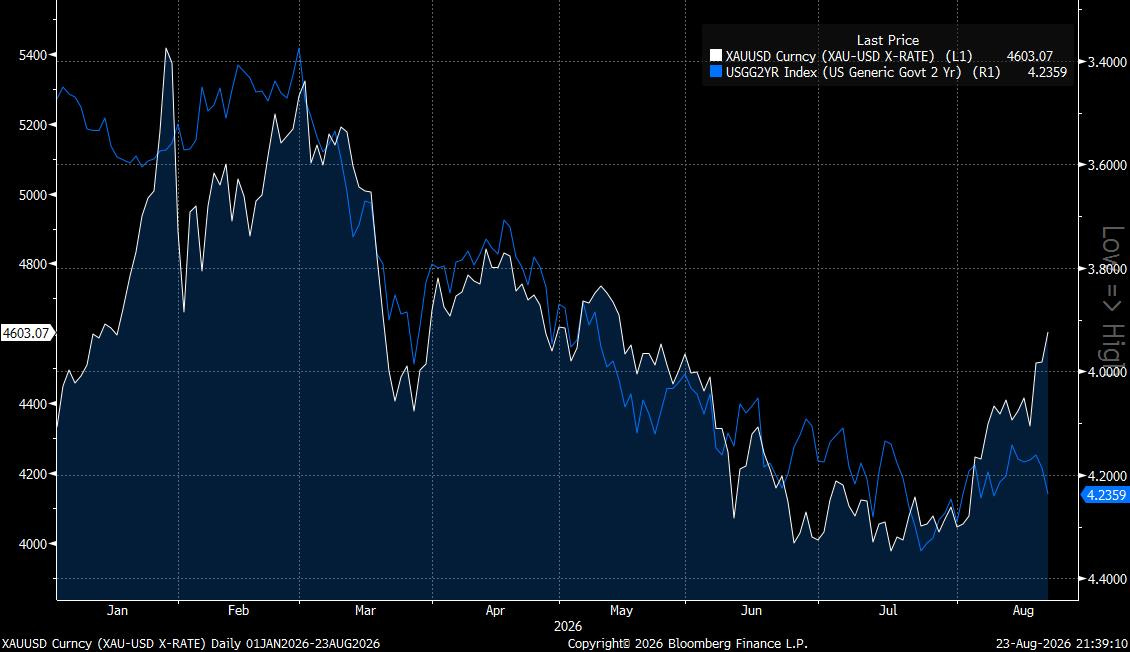
That inverse relationship will continue to favour gold. US economic data keeps disappointing, leaving the door open to further dovish shifts in policy expectations. Options traders are already hedging the risk that the Fed pivots to cutting rates in 2027.
Meanwhile, long-end US yields remain elevated even after Wednesday’s pullback, but their relationship with gold is more nuanced. The negative correlation strengthened during the Iran war but reversed in June, around the same time the US term premium began to rise. That suggests higher yields pose less of a headwind to gold when investors demand greater compensation for long-duration risks such as inflation and fiscal uncertainty.
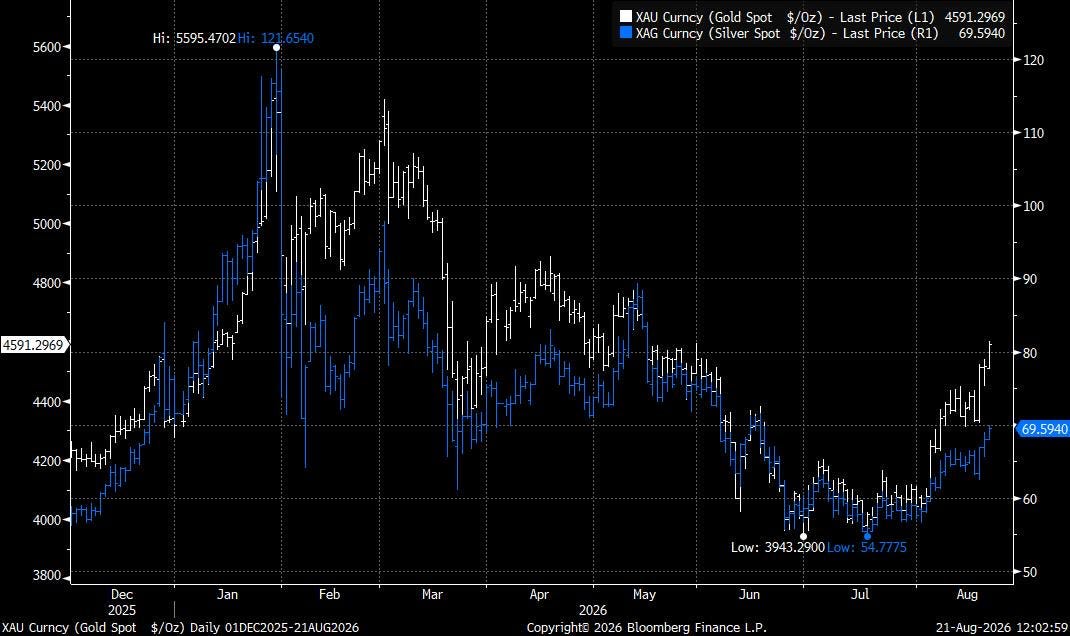
As for our call butterfly spread, we remain holding this position, which is up about 7x, with a maximum payout of 1x at $4750. It’s been a great trade so far.
Elsewhere In the Week
The week ahead includes the July US PCE index and the Kansas City Fed’s annual economic symposium in Jackson Hole. Nvidia earnings will also be released, with investors focused on whether AI demand can sustain its valuation.
We spoke about these two topics in more detail last week. In short, Warsh has an opportunity to become better understood by markets, and markets will focus on Nvidia’s continued role as the Bank of AI, looking for fresh details on AI financing and circularity risks.
Top Trade Ideas and Views
Curves
US 2s10s steepener
UK 10s30s flattener (here)
JP 2s10s steepener
Rates
Fed and BOE on hold for the remainder of the year
BOJ hike in September, and two hikes in 2027
ECB October hike
FX
Bearish USD
EURGBP six-month put spread, 0.855-0.845
Equities
SPX call condor (here)
Commodities
XAU 3-month call butterfly spread (here)
That’s all to start this week. See you soon,
AP
Amazing stuff!